

 See My Latest Article on HelloNation
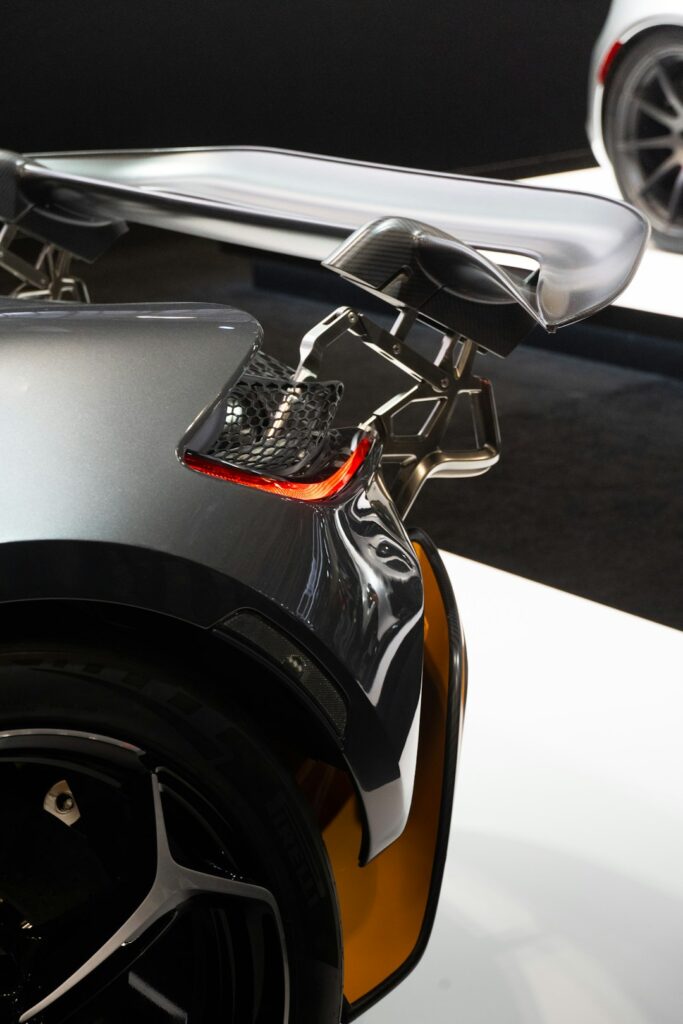
What does aerodynamics do for a supercar?
Aerodynamics determines how air moves around, under, and through a supercar. That airflow affects stability, acceleration, braking, cornering, cooling, cabin noise, and even fuel or battery efficiency.
At low speeds, engine power, tire grip, suspension, and vehicle weight usually have the greatest influence on how a car feels. As speed rises, aerodynamic forces become much more significant. A car traveling quickly through the air can generate forces that change how much weight each tire effectively carries.
For residents of Scottsdale, AZ, this matters even during ordinary driving. Wide roads, high-speed freeway travel, hot summer conditions, and occasional strong crosswinds can all make aerodynamic design noticeable, even when a vehicle is not being driven on a racetrack.
How does downforce improve handling?
Downforce is aerodynamic force directed toward the pavement. It increases the pressure placed on the tires without adding physical mass to the car.
More tire load can improve:
- Cornering grip
- Braking stability
- Acceleration traction
- Steering precision at higher speeds
- Resistance to light aerodynamic lift
A supercar may use a front splitter, rear wing, diffuser, carefully shaped bodywork, or active aerodynamic panels to create downforce. These parts work together to manage air pressure above, below, and behind the vehicle.
Downforce is most useful when the tires already have enough grip to use it. It does not eliminate the limits of pavement, tire condition, suspension setup, or driver input. It also comes with a tradeoff: aerodynamic devices that create more downforce usually create more drag.
Why does drag reduce top speed and efficiency?
Drag is the aerodynamic resistance that opposes forward motion. The harder a vehicle must push air aside, the more power it needs to maintain speed.
A low-drag design can help a supercar:
- Reach a higher top speed
- Use less energy while cruising
- Accelerate more effectively at high speeds
- Produce less wind noise
- Reduce stress on the powertrain
Drag increases sharply as speed rises. This is why a design that feels efficient at neighborhood speeds can require substantially more power at freeway speed. The vehicle’s shape, ride height, exposed wheels, mirrors, cooling openings, underbody, and rear-end design all affect drag.
Supercar designers therefore balance downforce and drag rather than simply maximizing one. A track-focused setup may accept greater drag for improved cornering, while a high-speed touring setup may reduce aerodynamic resistance.
What are splitters, diffusers, wings, and air curtains?
Each aerodynamic component manages air in a different way.
A front splitter extends the lower front edge of the vehicle. It helps control airflow beneath the nose and can increase front-end stability. If it sits too close to the pavement, steep driveways or uneven surfaces may damage it.
A rear wing creates a downward aerodynamic force at the back of the vehicle. Its effect depends on its angle, shape, height, and relationship to the rest of the body. A large wing is not automatically better; excessive rear downforce can upset the balance between the front and rear tires.
A diffuser is shaped to help air leave the underside of the vehicle smoothly. Underbody airflow can reduce pressure beneath the car, contributing to downforce. The diffuser works best when ride height and airflow remain within the range intended by the vehicle’s design.
Air curtains guide air around the front wheels, where turbulence can create substantial drag. Other channels may send air toward brakes, radiators, engine compartments, or battery systems.
Why is aerodynamic balance more important than maximum downforce?
A supercar must maintain a predictable relationship between front and rear grip. If the rear receives much more aerodynamic load than the front, the car may feel stable but resist turning. If the front receives disproportionately more load, the rear may become less secure during high-speed cornering or braking.
Aerodynamic balance can change with:
- Vehicle speed
- Ride height
- Braking or acceleration
- Steering angle
- Wind direction
- Suspension movement
- Adjustable wing settings
- Open or closed active air vents

A car that feels neutral at one speed may feel different at another because aerodynamic forces do not remain constant. This is one reason factory aerodynamic systems are developed as part of a complete vehicle rather than as isolated accessories.
How do active aerodynamics work?
Active aerodynamic systems adjust airflow while the car is moving. An electronically controlled spoiler may change angle, vents may open or close, and body panels may shift to prioritize cooling, stability, braking, or reduced drag.
During hard braking, an active rear element may move into a position that adds stability and aerodynamic resistance. During cruising, it may retract to reduce drag. Air-management systems can also open cooling passages when the engine, brakes, or battery need more airflow.
These systems improve versatility, but they also add mechanical and electronic complexity. A warning light, damaged panel, obstruction, or incorrect ride-height setting can affect how the vehicle manages airflow.
Does hot weather change aerodynamic performance?
Temperature affects air density, and air density influences aerodynamic force. Warmer air is less dense than cooler air, so the same vehicle generally produces slightly less aerodynamic load in hotter conditions at the same speed.
In Scottsdale, summer heat can also affect performance through tire temperatures, engine or battery cooling, brake temperature, and pavement conditions. These factors may be more noticeable than the modest aerodynamic change caused by air density alone.
Dust and debris can create additional concerns. Blocked cooling openings, dirty underbody surfaces, or damaged lower panels can interfere with airflow. A clean exterior does not guarantee that every aerodynamic passage is unobstructed.
Can crosswinds affect a supercar?
Yes. Crosswinds create side forces that can influence steering feel and directional stability, particularly in a low, lightweight vehicle with large aerodynamic surfaces.
Open stretches of roadway, exposed bridges, passing trucks, and sudden gaps between buildings can produce changing wind conditions. A rear wing, tall spoiler, or broad body surface may increase sensitivity to side gusts depending on the vehicle’s design.
Drivers should avoid abrupt steering corrections in strong wind. Smooth inputs give the tires and stability systems more time to respond.
Does lowering a car always improve its aerodynamics?
Not necessarily. Lowering the body can reduce the amount of air entering beneath the vehicle, but the result depends on the entire underbody design and suspension geometry.
If the ride height becomes too low, airflow may separate beneath the car, the diffuser may stop working properly, or the vehicle may strike pavement and lose consistency. Changes to springs, dampers, alignment, wheel size, or tire dimensions can also affect aerodynamic balance.
For road use, the most predictable performance usually comes from keeping the suspension, ride height, panels, and tire specifications within the configuration intended for the vehicle.
What should drivers understand about aerodynamic claims?
A quoted downforce or drag figure is meaningful only when its testing conditions are clear. Results can vary with speed, ride height, wind angle, tire setup, surface quality, and whether the measurement applies to the entire vehicle or one component.
A dramatic-looking wing or splitter may change appearance more than real-world performance. Effective aerodynamics is usually the result of coordinated design: smooth airflow, controlled underbody pressure, balanced front and rear forces, and adequate cooling.
For everyday driving, aerodynamic benefits are most relevant as speed increases. The practical goal is not maximum force, but predictable stability, efficient airflow, and a vehicle that remains composed across changing road, weather, and temperature conditions.