

 See My Latest Article on HelloNation
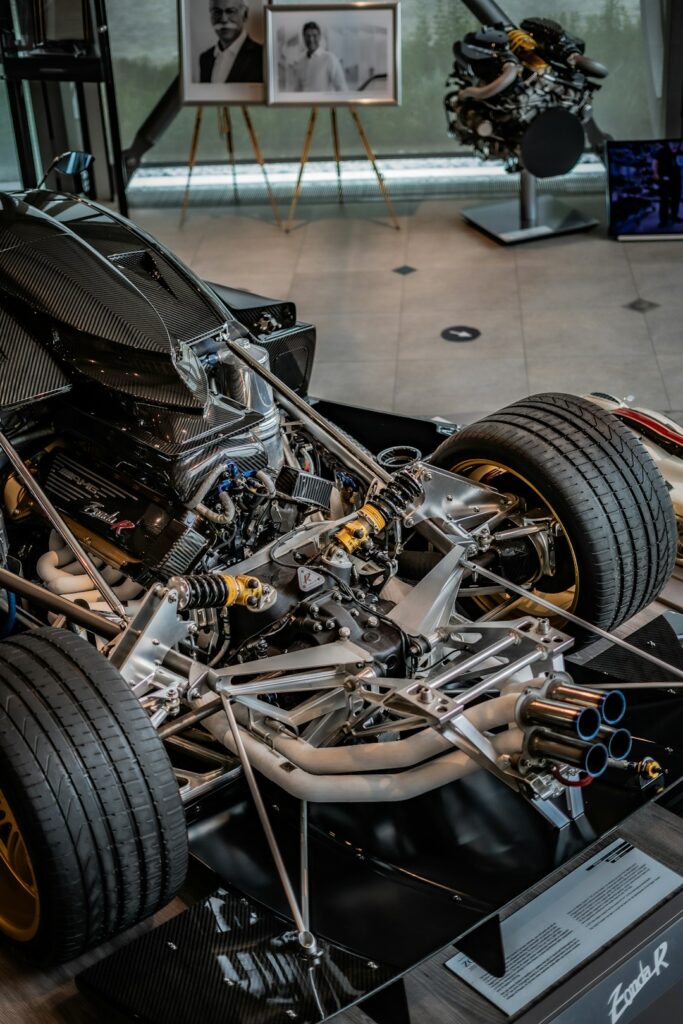
Supercars are not simply ordinary vehicles with larger engines. They are highly integrated machines in which the engine, chassis, suspension, brakes, tires, aerodynamics, electronics, and cooling systems are designed to work together under unusually demanding conditions.
For residents interested in performance vehicles, understanding these systems makes it easier to separate meaningful engineering from visual styling or headline horsepower figures.
What makes a car a supercar?
A supercar is generally defined by a combination of exceptional performance, advanced construction, specialized systems, and a design focused strongly on speed and handling. There is no single horsepower number or legal definition that separates a supercar from every other vehicle.
The most useful distinction is how many vehicle systems are optimized at once. A supercar may combine:
- A high-output engine or electric powertrain
- A lightweight, rigid structure
- Advanced aerodynamic management
- High-performance braking hardware
- Sophisticated suspension and stability controls
- Specialized tires and wheels
- Extensive thermal management
These systems must function as a complete package. Adding power without improving traction, cooling, braking, and structural strength would make the vehicle faster in only a limited sense.
How does a supercar engine produce so much power?
Supercar engines achieve high output through a combination of displacement, airflow, compression, forced induction, high engine speeds, and precise electronic control.
A naturally aspirated engine relies on atmospheric pressure to fill its cylinders. Turbocharged and supercharged engines use additional pressure to force more air into the combustion chambers. More air allows more fuel to be burned, producing greater power, although it also creates additional heat and mechanical stress.
Engine speed matters as well. Power is related to both torque and rotational speed. A large engine may produce strong torque at lower revolutions, while a smaller engine with advanced turbocharging may generate substantial power through efficient airflow and high operating speeds.
Modern supercars also use electronic engine management systems that continually adjust fuel delivery, ignition timing, boost pressure, and throttle response. Hybrid systems can add electric motors that provide immediate torque, fill gaps in acceleration, and recover energy during braking.
The result is not just a powerful engine. It is a powertrain calibrated to deliver performance predictably and repeatedly.
Why are lightweight materials so important?
Reducing weight improves nearly every aspect of vehicle performance. A lighter car accelerates more easily, requires less braking force, changes direction with less effort, and places less stress on tires and suspension components.
Supercar structures often use aluminum, carbon-fiber-reinforced composites, or carefully engineered combinations of metals and composite materials. Carbon fiber is especially useful because it can provide high stiffness with relatively low mass.
The central structure may be designed as a rigid passenger cell, sometimes called a carbon-fiber tub or monocoque. This structure helps maintain suspension geometry and protects occupants while allowing engineers to reduce weight elsewhere.
Weight distribution is also critical. Placing heavy components near the center of the vehicle can reduce rotational inertia, making the car feel more responsive when turning. Mid-engine layouts are common because they can help concentrate mass between the axles, though the ideal arrangement depends on the vehicle’s overall design.
Lightweight construction does not mean every component is delicate. Supercars still require strong crash structures, durable suspension mounting points, and protection from heat, vibration, and road impacts.
How do aerodynamics improve handling?
Aerodynamics controls how air moves around and under the vehicle. At speed, the shape of the body can create either lift or downforce.
Lift reduces tire contact with the road and can make a vehicle less stable. Downforce presses the vehicle toward the pavement, increasing the available grip during cornering and braking. Splitters, diffusers, wings, underbody panels, vents, and carefully shaped body surfaces all influence this balance.
Aerodynamic parts must be designed with tradeoffs in mind. More downforce may improve cornering but also increase drag, which can reduce efficiency and top speed. Airflow is also needed to cool the engine, transmission, brakes, battery, and other components.
Some advanced vehicles use active aerodynamic devices that change position according to speed, braking, acceleration, or cornering. These systems can reduce drag on a straight road and produce additional stability during hard braking or high-speed turns.
A car that looks aggressive is not automatically aerodynamically effective. The important question is whether the design produces stable, predictable forces under real driving conditions.
Why are the brakes and tires so specialized?
A supercar’s acceleration is only useful if the vehicle can slow down repeatedly and remain controllable. High-performance braking systems are designed to manage both stopping force and heat.
Brake rotors and pads convert motion into heat. During repeated hard braking, temperatures can rise enough to reduce friction, damage components, or cause brake fluid to boil. Larger rotors, high-temperature materials, improved airflow, and multi-piston calipers help manage these demands.
Carbon-ceramic brakes can offer lower unsprung weight and strong resistance to heat-related fading, but they may behave differently during light use and can be costly to replace. Steel brakes remain highly capable and may be better suited to some driving patterns.
Tires are equally important. Modern performance tires use specialized rubber compounds, stiff sidewalls, and tread designs intended to produce grip during acceleration, cornering, and braking. Their performance depends heavily on temperature, pressure, age, road surface, and alignment.
A supercar with worn or improperly inflated tires cannot deliver the performance suggested by its specifications.

What role does the suspension play?
The suspension keeps the tires in contact with the road while controlling body movement. It must balance opposing goals: comfort, grip, steering precision, ride height, and stability.
Stiffer springs and dampers can reduce body roll and improve response, but excessive stiffness may make the vehicle less effective on uneven pavement. Adaptive dampers allow the suspension to change its behavior between relaxed road driving and more demanding use.
Some systems also adjust ride height, roll resistance, or suspension firmness electronically. These changes can improve aerodynamic efficiency and handling, but they add complexity and require precise calibration.
For everyday driving, suspension geometry can matter more than extreme stiffness. If the tires lose contact with the road over rough pavement, additional power or downforce cannot restore grip immediately.
Why do electronics matter so much?
Modern supercars rely on software to coordinate many mechanical systems. Traction control, stability control, active differentials, launch control, torque vectoring, adaptive suspension, and hybrid energy management may all work together within milliseconds.
These systems do not eliminate the laws of physics. Instead, they help the driver use available grip more consistently. Torque vectoring, for example, can send different amounts of power to individual wheels to improve cornering behavior. Stability control can reduce engine torque or apply individual brakes when the vehicle begins to rotate beyond the intended path.
Drivers should understand that electronic aids are not a substitute for safe speeds, suitable road conditions, or proper tire maintenance. Public roads do not provide the controlled environment of a racetrack.
How does Scottsdale’s climate affect supercar engineering?
The desert environment creates practical demands that are easy to overlook. High temperatures place additional stress on cooling systems, batteries, fluids, tires, and electronic components. Dust can also affect air filters, radiators, condensers, and other areas that depend on clean airflow.
A supercar’s cooling system is engineered to manage substantial heat, but that does not make heat irrelevant. After extended operation in very warm conditions, fluid temperatures may remain elevated even after the vehicle is parked. Shade, proper ventilation, and attention to temperature warnings are especially relevant during the hottest parts of the year.
Seasonal temperature changes also affect tire pressure. Pressure should be checked when the tires are cold and adjusted according to the vehicle manufacturer’s specifications rather than appearance or personal preference.
Road conditions matter too. Uneven pavement, steep driveway transitions, debris, and standing water can challenge low ride heights, wide tires, and exposed aerodynamic components.
What should new enthusiasts focus on first?
The most useful starting point is understanding the relationship between the major systems:
- Power creates acceleration.
- Tires transmit force to the road.
- Suspension manages contact and body movement.
- Aerodynamics influences stability and grip.
- Brakes convert speed into heat.
- Cooling systems manage the heat created by all of these demands.
- Electronics coordinate the entire vehicle.
A supercar is impressive not because one component is extreme, but because many components operate together within narrow engineering tolerances. That integrated approach is the foundation of its performance—and the reason proper operating conditions, tire care, temperature awareness, and mechanical knowledge matter as much as headline specifications.